
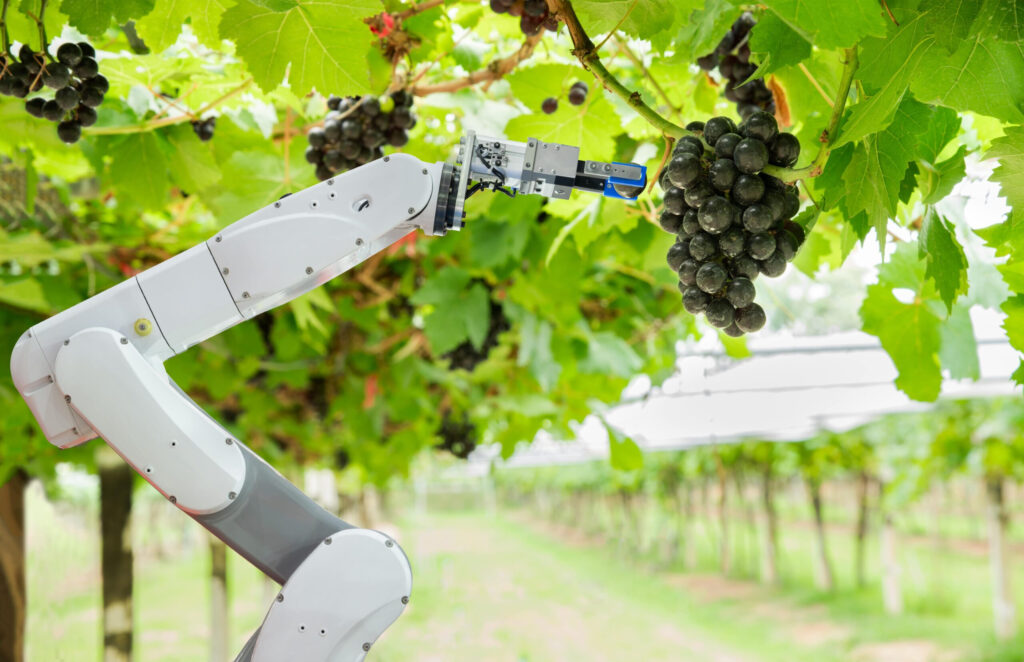
- Fieldwork is the world’s first automated raspberry harvesting technology, supported by private investment and government grants
- They are years ahead of their peers with no direct competitors targeting the same market
- Using their technology allows farmers to reduce risks associated with the low availability, unpredictability, and increasing costs of seasonal farm labor
- The Fieldwork technology is climate-friendly, reducing food wastage which is exceptionally high in the raspberry industry
- Fieldwork is a pioneering tech start-up based in the UK but with a global scope, targeting growers in the UK, Portugal, Australia, and California
Problem
- Due to low availability and increasing costs of labor, growers face unprecedented labor costs and a shortage of available fruit pickers
- This combination of factors has meant that up to 30% of raspberry crops are currently left in the field and wasted, the impact of this is significant
- Food security: globally, there is an increasing scarcity of goods, farming practices are currently unsustainable, 30% of raspberry crops are currently left unharvested
- Food costs: increasing harvesting wage costs, food inflation, and importation costs have combined to push up food prices
- Climate impact: agriculture contributes to 20% of global GHG emissions and food waste also has a significant GHG emission impact
Solution
- Fieldwork has developed the world’s first fully autonomous robotic harvester of soft fruit, focussing on the $2.2bn fresh raspberry market
- Fieldwork’s technology reduces the harvesting cost per berry for growers, improving margins and affordability
- Food security: removes risk and reduces wastage
- Food costs: improves margin control by providing farmers with a predictable opex cost
- Climate impact: reduces emissions associated with food production
Overview
- Fieldwork Robotics is transforming agriculture with selective, autonomous harvesting robots
- The company has engineered the world’s first fully autonomous robotic harvester of soft fruit (raspberries), providing farmers with a cost-effective, sustainable solution to transform the harvesting process
- Fieldwork will capitalize on the $2.2bn market opportunity that is the fresh raspberry market
- Fieldwork Robotics was founded in 2016 by Martin Stoelen. Focusing on the harvesting of soft fruits using vertical robots, Fieldwork aims to solve the interrelated problems of worker shortages, farm inefficiency, and food wastage
- Fieldwork’s proprietary AI technology combined with its unique modular soft robotic arms bring together cutting-edge hardware and software to offer highly advanced harvesting robots
- The company has low tech risk; the technology underpinning Fieldwork’s operations is proven and market-ready, as well as being compatible with other robotic platforms, leading to increased utility for growers worldwide
- Customers are demanding this solution; we have 100x robots signed option agreement, with advanced discussions underway with 1-2 new “Trial to Commit” contracts expected to be signed shortly
History and Key Milestones
- January 2024: Received a further £850k grant from InnovateUK
- December 2023: Received £1.1m grant from InnovateUK
- October 2023: closed a Seed funding round valued at over £1.5m
- August 2023: £1.5m investment from Elbow Beach Capital
- 2019: Initial field trials with the Hall Hunter Partnership completed
- 2016: Founded as a spin-out from the University of Plymouth
Innovation
- Fieldwork has developed a world-leading autonomous, AI-powered robotic harvester
- Remote data stream sensors to enable remote fleet management
- Global camera driving proprietary AI vision and decision engineering
Sustainability Landscapes
- Food waste: implementation of Fieldwork’s technology aims to reduce food wastage. The robots are able to work consistently and for longer hours than human workers, providing coverage during critical harvesting periods. They are also able to accurately detect the ripeness and location of berries, further reducing wastage caused by human error.
End Markets
- The raspberry market is currently worth an estimated $2.2bn
- Fieldwork’s end users are farmers and growers in the UK and internationally, with a particular focus on Australia and the USA as key target markets
- In the longer term, Fieldwork Robotics expects to target markets of other soft fruits, leveraging its market-leading position as the world’s only autonomous raspberry harvester to compete in more saturated markets such as strawberry harvesting
Competitors
- Fieldwork has no direct competitors since all other robotic harvesting companies are focused on strawberries
Growth strategy
- The agri-tech industry is expected to grow to a £52.5bn valuation by 2030
- Fieldwork plans to continue developing its technology, in the short-term through software progression as part of the BerryAI Project
- Fieldwork will capitalize on its world-leading position as an automated harvester of soft fruits, years ahead of any potential competitors
- Long-term there is potential to expand Fieldwork’s innovative technology into neighboring markets including other difficult-to-harvest soft fruits
- By building up relationships with international growers as the world’s only raspberry harvester, Fieldwork will then be in a prime position for cross-selling opportunities in developing solutions for harvesting other fruits, including the far more competitive strawberry market (currently worth $18.5Bn)
